TL;DR: Credit Card Surcharges
A credit card surcharge is a fee added by a business to a customer’s transaction to recoup the 2-3% processing costs charged by payment networks.
Key Takeaways
-
The Model: Surcharging allows companies to protect their bottom line by passing processing fees directly to the customer rather than absorbing them as an operating expense.
-
Ideal Context: Most effective for businesses with high credit card transaction volumes where thin margins are being eroded, provided they offer fee-free alternatives like ACH.
-
The Lifecycle: 1. Pre-Check: Verify regional legality and card network rules (e.g., Visa/Mastercard mandates).
2. Disclosure: Clearly notify customers of fees at the point of sale and on invoices.
3. Application: Apply the fee as a separate line item that does not exceed actual processing costs.
-
Regulatory Impact: Surcharging is subject to a complex landscape of state-level bans (e.g., CT, MA) and strict transparency requirements; non-compliance can lead to legal penalties or lost merchant status.
Implementation Steps
-
Define Strategy: Determine which customer segments will be charged (e.g., autopay users) and which will be exempt (e.g., high-value enterprise accounts).
-
Establish Rates: Build dynamic rate cards that adjust based on the card type (corporate vs. personal) and regional caps.
-
Transparent Communication: Use multi-channel notifications to explain the fee and promote lower-cost payment alternatives to maintain goodwill.
-
Automate Calculations: Use a billing system with smart workflows to automatically apply fees and handle exception scenarios based on real-time data.
The Bottom Line
Credit card surcharging is a high-impact strategy for reclaiming margins, but success depends on balancing financial recovery with customer satisfaction. By automating the process and staying compliant with evolving regulations, finance teams can turn a major expense into a reinvestment opportunity.
Are you looking to automate these surcharge calculations within your billing system, or are you currently evaluating the legal feasibility of starting a program?
Credit cards offer a convenient, low-friction experience for customers, but the processing fees can add up to be a meaningful drain on margins. Passing credit card surcharges to customers can help recoup these expenses. However, managing customer communications and backlash can be tricky, as can navigating the intricate regulatory landscape.
Why Add Credit Card Surcharges?
Credit card processing fees are typically only 2-3% of gross merchandise value. At first glance these might seem like nominal fees. However, if the majority of your customer base pays by card, these fees can have a material impact on the bottom line.
- Improves Margins: This recovered revenue directly bolsters your profit margins, adding another two or three percentage points.
- Fueling Growth: Funds can be reinvested in headcount for sales, marketing initiatives, developing new product features, or strengthening cybersecurity.

Listen to the Article
Understanding the Regulatory Issues
Before implementing any surcharge, it is important to understand the regulations governing surcharges for credit card processing fees. The rules vary by geography and payment network.
- Geographic Variations: Be aware that certain US states (e.g., Connecticut, Massachusetts) prohibit surcharges entirely, while others (e.g., Colorado, New York) have specific limitations. Similarly, international regulations differ, with some countries allowing them (e.g., Canada, Australia, with limitations) and others banning them for consumer transactions (e.g., UK).
- Card Network Directives: Major networks like Visa and Mastercard also have rules about credit card surcharges. These often mandate that fees appear as distinct line items, require advance notification to customers, and must not exceed the actual processing cost incurred by your business.

Designing the Surcharge Program
Identify which customer segments will be subject to fees, in which regions, and at what specific rates.
- Customer Segmentation: Consider categorizing your customers. Some may be exempt due to regional prohibitions or strategic business decisions. Others might always incur a surcharge (e.g., those on autopay with a credit card). A third group might incur a surcharge only when choosing a card at checkout.
- Dynamic Rate Cards: Surcharge amounts might need to fluctuate based on the specific card network (Visa, Amex) or card type (corporate, personal). For global SaaS providers, this could necessitate a complex ‘rate card’ to ensure compliance and fairness across diverse markets.

Managing Customer Communications and Backlash
The potential for customer dissatisfaction is a primary concern when introducing credit card surcharges. Proactive, transparent, and consistent communication is the best strategy to reduce negative reactions and maintain strong customer relationships.
- Multi-Channel Notification: Inform customers at every relevant touchpoint: during the sales process, at the virtual point of sale (self-service checkout, autopay enrollment, ‘Pay Now’ links), on invoices as a separate line item, and within your billing FAQs.
- Educate and Offer Alternatives: Clearly explain *why* the surcharge is applied and, crucially, highlight alternative, lower-cost payment methods (like ACH or bank transfers) that customers can use to avoid the fee. This empowers them with choice.

Exception Scenarios to Waive the Fees
Sometimes strategic exceptions are necessary to protect valuable customer relationships. Consider having a policy that exempts certain accounts from the surcharges. Examples of groups that might be granted an exemption include:
- High-Value Accounts: Consider exempting key enterprise clients or those with significant growth potential. Putting a large account at risk over a relatively small surcharge is not worth the risk.
- “Grandfathering” Existing Clients: You might choose to exempt long-standing customers from new surcharges, especially during the initial rollout, to ease the transition and maintain goodwill. This can significantly reduce churn risk.

Automate Surcharge Calculations in the Billing System
Configure the billing system to match the policies and exception scenarios identified above.
- Smart Workflows: Advanced billing systems can be configured with business rules to automatically calculate and apply surcharges based on customer segments, regional regulations, and chosen payment methods.
- Standardize across Channels: Whether it’s during a monthly billing run, a self-service checkout, or a ‘Pay Now’ transaction, the software ensures the surcharge is correctly added and displayed as a separate line item, adhering to card network rules.

Pro-tips
Consult Legal Experts Early
Payment regulations and card network policies are always evolving. Engage with legal professionals specializing in payment processing and regional compliance. Their expertise will ensure your surcharge strategy is fully compliant and minimizes legal risks.
Promote Lower-Cost Payment Alternatives
Actively encourage customers to switch to lower-cost payment methods like ACH, PAD, or direct bank transfers. Not only does this help customers avoid surcharges, but it also reduces your overall processing costs, creating a win-win scenario for both parties.
Monitor and Adapt Your Policy
Monitor customer feedback about the surcharges. Use the feedback to refine policies regarding the customers that are charged, the amount of the surcharges, and the exception scenarios to waive the fees. Improve the customer communications, including website FAQs, invoice line item descriptions, and checkout notifications.
Recurring Payments Solution
from Ordway
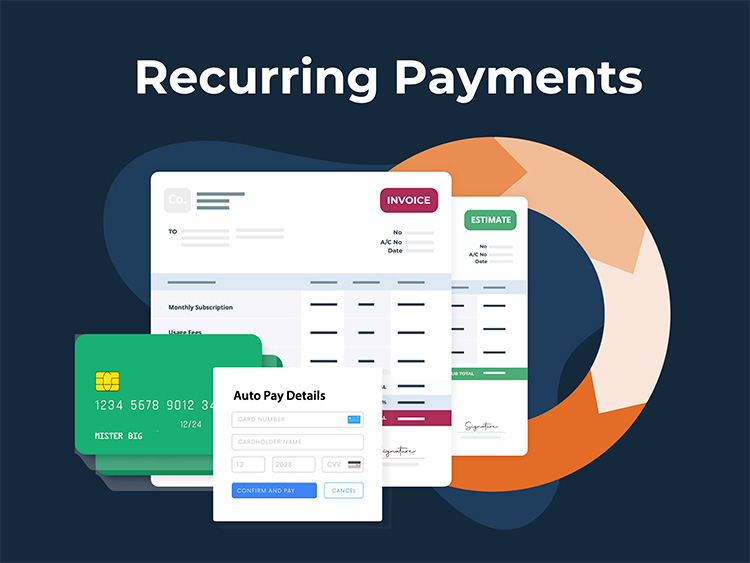
Setup auto-pay with credit cards. Offer hosted PayNow pages. Invoice customers for payment via ACH, wire transfer, and check. Use your preferred payment gateway. Ordway integrates with Stripe, Braintree, and more.
You May Also Like
 Stablecoin Payments: How Modern Businesses Are Adopting Them
Stablecoin Payments: How Modern Businesses Are Adopting Them
 What Is Credit Card Auto Updater and How Businesses Use It
What Is Credit Card Auto Updater and How Businesses Use It
 Bank Lockbox Explained: Streamlining Business Check Processing