In the dynamic world of SaaS, financial terminology can often be a source of confusion. Terms like ‘revenue’ and ‘Annual Recurring Revenue’ (ARR) are frequently used interchangeably, but there are essential differences between them. Understanding their fundamental differences is crucial for accurately assessing a SaaS business’s true health and future trajectory.
Key Takeaways: Understanding SaaS Revenue Metrics
- GAAP revenue reflects historical sales, adhering to strict accounting principles for comprehensive financial reporting.
- ARR provides a forward-looking projection of a SaaS company’s predictable, recurring subscription income over the next year.
- SaaS businesses generate various income streams, but only consistent, recurring elements contribute to ARR calculations.
- Both GAAP revenue and ARR should be analyzed for a holistic perspective, guiding strategic decisions and investor communications.
1.What is GAAP-Compliant Revenue in SaaS and Why is it Important?
When we talk about ‘revenue‘ in a SaaS context, we’re typically referring to the figures reported on a company’s income statement. This metric is inherently historical, documenting all sales activities over a specific period, whether they are recurring or one-time.
- It strictly adheres to Generally Accepted Accounting Principles (GAAP), such as ASC 606 in the US or IFRS 15 internationally, ensuring transparency and comparability.
- Revenue recognition often occurs ratably across the contract term, meaning if a customer commits to a $12,000 annual contract, $1,000 of revenue is recorded each month, regardless of when the cash is actually collected.
- Due to its significance for statutory reporting and investor scrutiny, GAAP revenue calculations undergo rigorous external audits.
2. How Does Annual Recurring Revenue (ARR) Forecast Future SaaS Performance?
Annual Recurring Revenue (ARR) offers a different perspective, focusing exclusively on the predictable, recurring income a SaaS business expects to generate over the next 12 months from its current customer base.
- Unlike GAAP revenue, ARR is not an accounting standard but an industry-specific operational metric, providing a theoretical ‘run rate’ of the subscription business.
- It projects future recurring earnings based on existing contracts, assuming no new customers, renewals, upgrades, or downgrades, offering a snapshot of current momentum.
- For subscription-based pricing, ARR is typically calculated by annualizing monthly recurring fees, reported upfront to investors, independent of cash collection schedules.
3. What Are the Diverse Income Streams for SaaS Companies Besides Subscriptions?
Not all income generated by SaaS companies is recurring, and understanding the different types of fees is key to distinguishing what counts towards ARR.
- Fixed Recurring Fees: These are the classic subscription models, where customers pay a consistent monthly or annual fee for software access. Examples include tiered pricing (e.g., ‘basic,’ ‘premium’) and per-user charges, providing a stable and predictable revenue stream.
- Variable Recurring Fees: Common in usage-based models, these fees fluctuate based on customer consumption (e.g., API calls, data volume). While individual customer revenue may vary, the aggregate across the customer base often shows predictable, recurring patterns.
- Non-Recurring Fees: These are one-time charges for services like software implementation, data migration, or specialized training. Although essential for customer success, these ancillary revenues are generally excluded from ARR as they lack the predictable, recurring nature.
4. Comparing Annual Commitments and Monthly Flexibility in SaaS Contracts
The structure of customer contracts significantly impacts revenue predictability and acquisition strategies.
- Annual Contracts: SaaS providers highly value annual or multi-year contracts due to the enhanced revenue predictability they offer. Companies often incentivize longer commitments with discounts (e.g., 10-20% off list price) or deeper savings for upfront payments. These contracts typically include clauses that commit customers for the full term, preventing early cancellations.
- Monthly Plans: Some SaaS firms offer monthly subscription options primarily as a customer acquisition tool. This allows potential users to experience the product’s value without a long-term commitment, reducing initial friction. Monthly plans are often at full list price and allow customers to cancel at the end of any billing cycle, providing flexibility but less revenue predictability.
5. Why Are Both GAAP Revenue and Annual Recurring Revenue (ARR) Essential for SaaS Success?
For a comprehensive and accurate understanding of a SaaS company’s financial standing, both GAAP revenue and ARR are essential, serving distinct but complementary purposes.
- Strategic Forecasting: ARR is the go-to metric for forecasting future growth, evaluating sales performance, and communicating subscription momentum to investors. It highlights the core engine of a subscription business.
- Statutory Compliance: GAAP revenue is non-negotiable for official financial statements, adherence to regulatory covenants, and assessing profit margins. It provides the legally required historical record of all financial transactions.
- Holistic View: Strong financial operators reconcile both metrics regularly. This practice offers insights into pipeline health, delivery status, and cash flow impacts, enabling more informed strategic planning and better communication with stakeholders.
Actionable Strategies for Managing SaaS Revenue
How to Clearly Define Your Annual Recurring Revenue (ARR) Methodology
Given that ARR is an industry-defined metric without universal accounting standards, it’s paramount for every SaaS company to establish and clearly document its precise methodology for calculating ARR.
- This includes specifying what types of recurring fees are included or excluded.
- Outline how contract start/end dates and renewal rates impact the calculation.
- Consistent internal application and transparent external disclosure (especially for investors) prevent misunderstandings and build trust.
Best Practices for Reconciling Annual Recurring Revenue (ARR) and GAAP Revenue
To maintain a clear and consistent financial narrative, actively reconcile your ARR figures with your GAAP revenue. This practice helps identify discrepancies that might arise from timing differences, non-recurring items, or specific revenue recognition rules.
- Monthly reconciliation ensures that you understand the drivers behind any divergence between these two critical metrics.
- It provides insights into pipeline health and the operational aspects of your business that impact both current and future revenue streams.
Why Automating Billing and Revenue Recognition is Crucial for SaaS
Manual processes for billing and revenue recognition are prone to errors and can lead to ‘metric drift’ between ARR and GAAP revenue. Investing in a unified billing and revenue automation platform is crucial.
- Such systems can accurately manage contracts, amendments, and invoice schedules.
- They automate ASC 606 allocations, deferrals, and disclosures, ensuring compliance.
- This integration aligns ARR reporting with recognized revenue, significantly reducing the need for complex manual reconciliations and freeing up finance teams for more strategic analysis.
Conclusion: Mastering SaaS Revenue Metrics
Ultimately, distinguishing between GAAP revenue and Annual Recurring Revenue (ARR) isn’t just an academic exercise; it’s fundamental for anyone evaluating or leading a SaaS business. While GAAP revenue provides the essential historical, legally compliant record of all sales, ARR offers a critical forward-looking perspective on the predictable, recurring heart of a subscription model. Mastering both metrics empowers leaders to make more informed strategic decisions, communicate effectively with investors, and accurately chart the course for sustained growth and financial health.
ARR Reporting Software
from Ordway
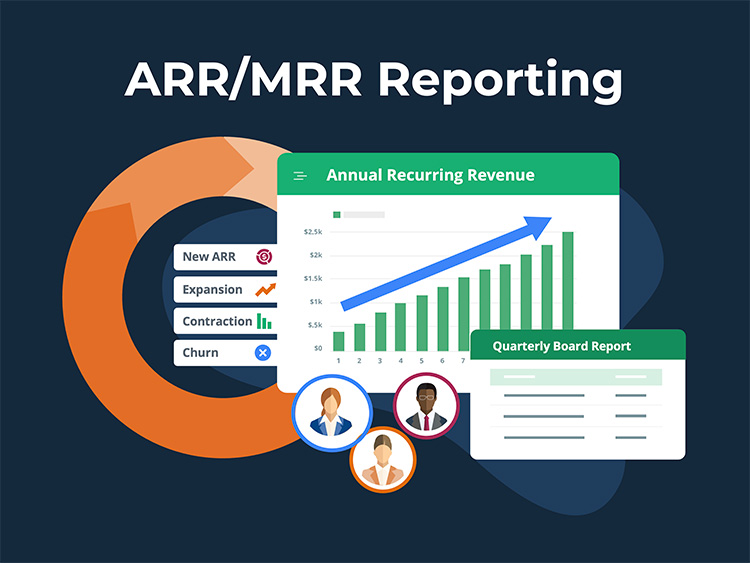
Track new, expansion, contraction, renewal, and churn ARR. Segment ARR by product line, geographic region, and legal entity. Report on ARR growth rates.
Learn More about SaaS Metrics