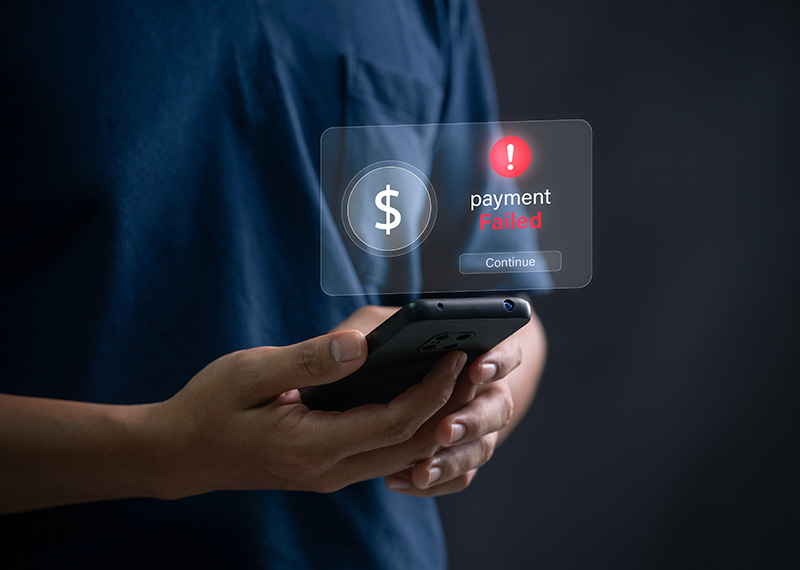
A failed payment doesn’t have to mean lost revenue. For subscription businesses, the difference between a declined transaction and a churned customer often comes down to what happens in the hours and days after that initial failure.

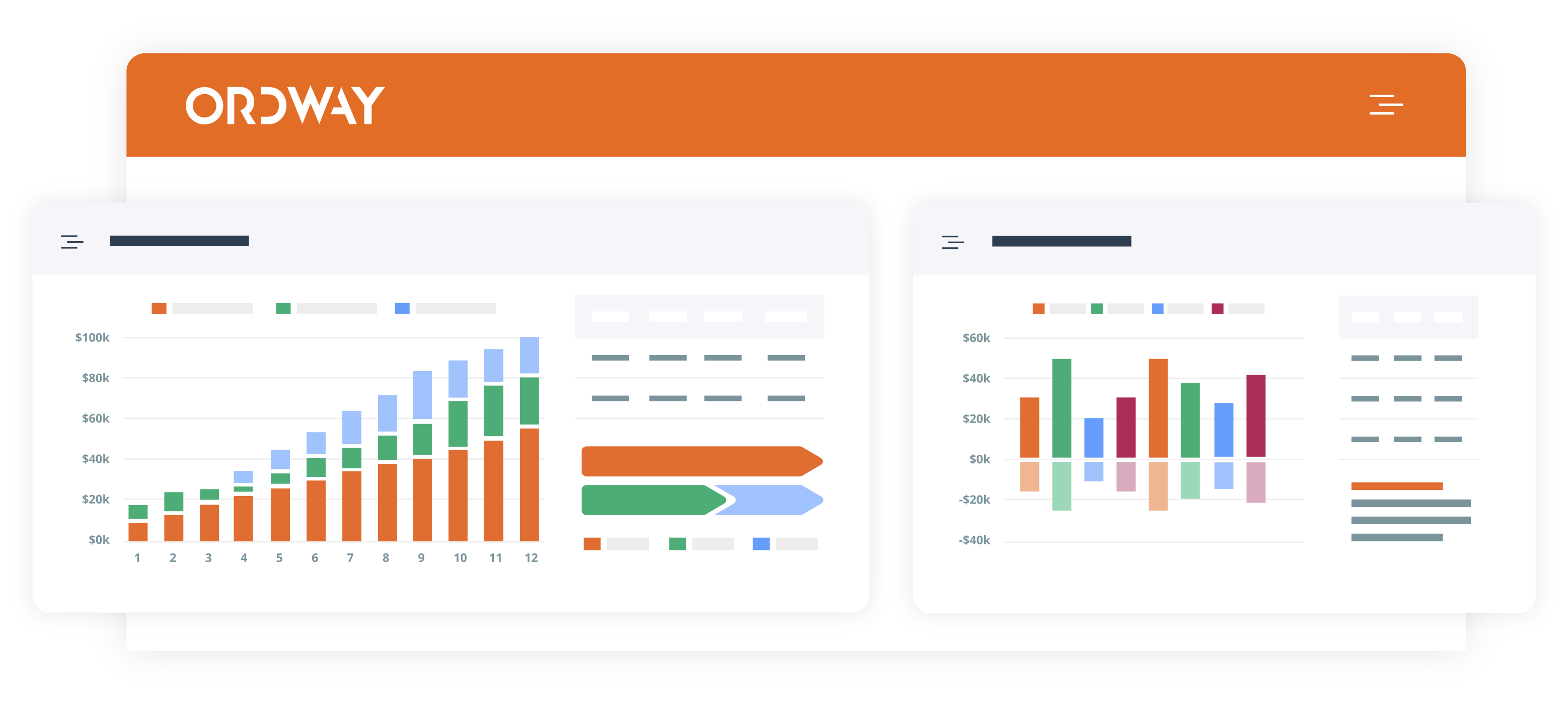
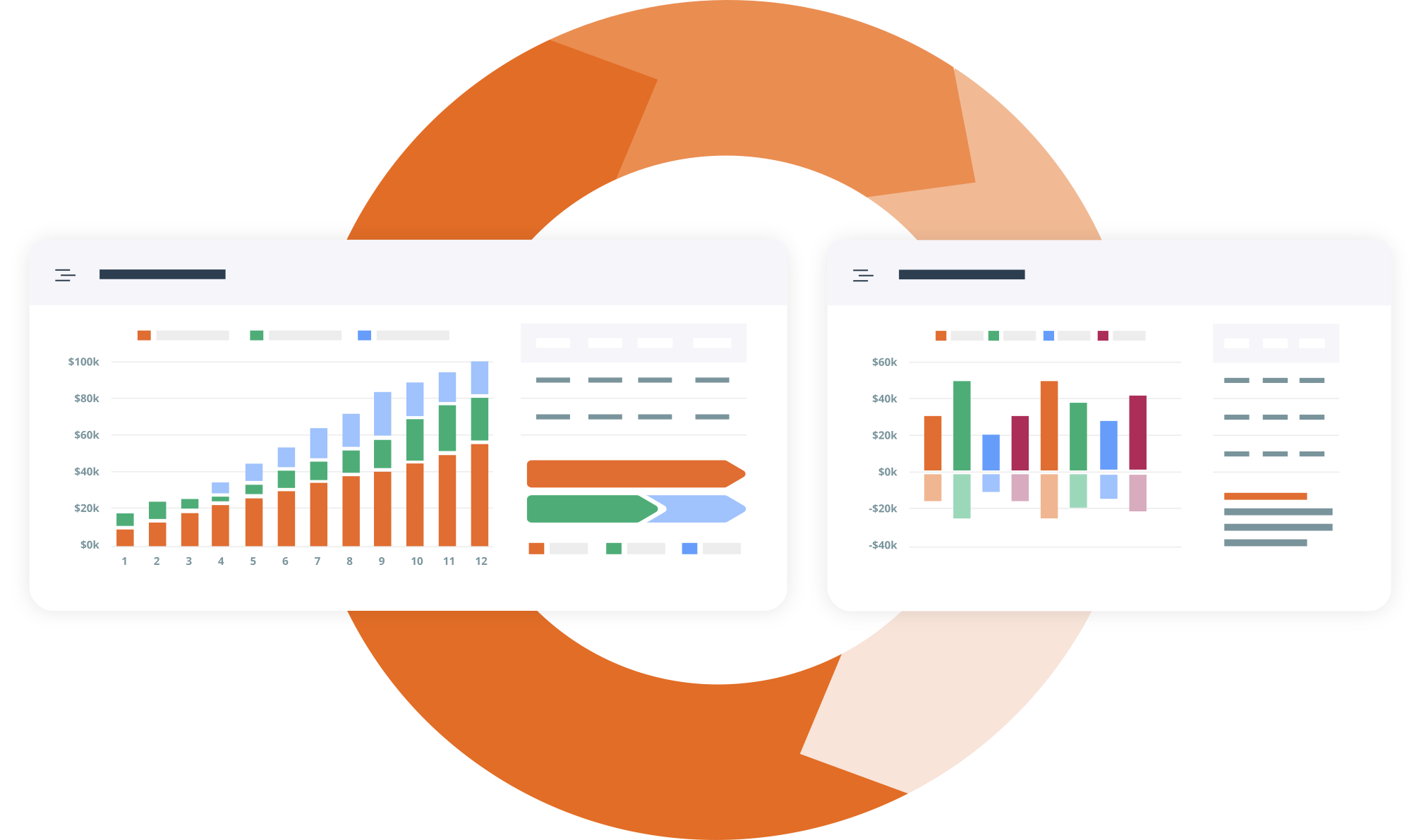
One application to automate the full order-to-revenue cycle. Generate invoices, collect payments, track receivables, and cash application from a single system.

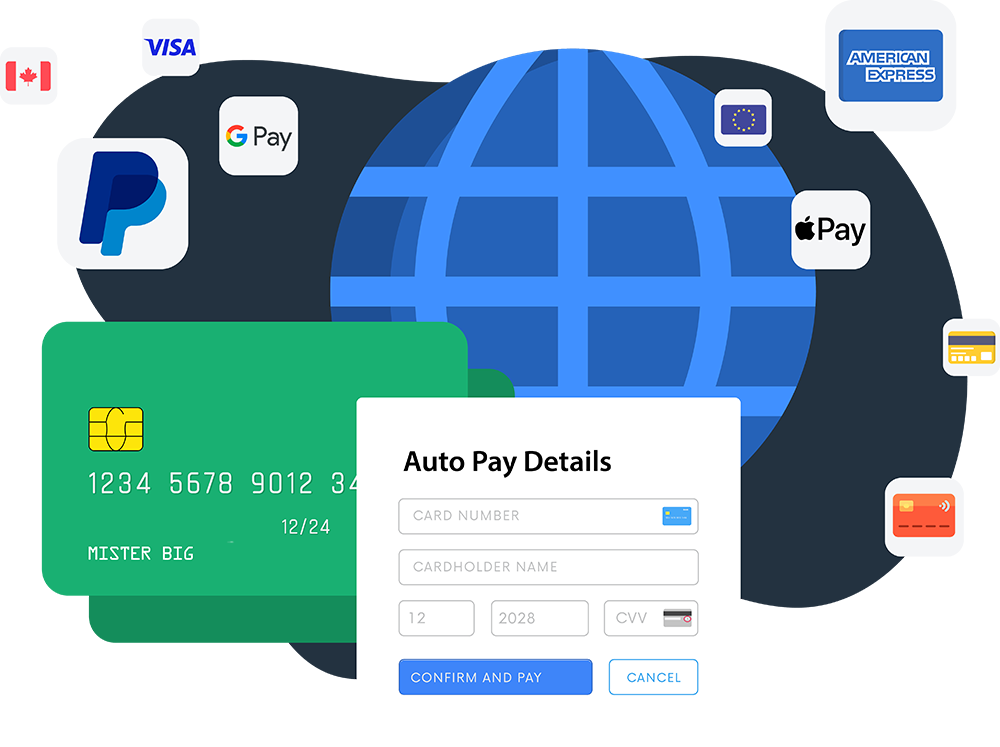
Accept credit and debit cards, digital wallets, and bank transfers.

Automate monthly, quarterly, and annual recurring payments

Match invoices to payments. Reconcile processing fees.

Automated retries, dunning emails, and backup payment methods.

Manage dispute workflows. Process refunds and credit memos.

Embedded in Your App and Website
You can embed Ordway’s payment collection capabilities in your app to acquire new customers as well as upgrade or renew existing accounts. Self-service models improve conversion rates by reducing the friction in the buying process.


For Recurring Billing
For recurring billing, encourage customers to enroll in autopay. Once the customer opts in with a preferred payment method, Ordway will perform batch credit card processing and bank account debits in automated payment runs. Billing schedules for autopay can be:
Payment runs will be performed monthly, quarterly, or annually in alignment with the customer’s contracted payment schedule. Billing can occur on the anniversary date of the customer’s contract or on specific day of the month (e.g, the 1st).
Autopay can also be triggered once a customer’s transaction volume exceeds a monetary thresholds such as $500. Threshold triggers are popular with usage-based pricing models in which charges vary each month based on consumption.

See Ordway Payments in action. Schedule a 30-minute Ordway demo with one of our sales engineers.


Reconcile Payments and Invoices
Probabilistic and deterministic matching of incoming payments received through multiple channels. Card and bank transfer payments collected via Ordway Payments as well as checks, wire transfers, and bank transfers collected by banking partners can be auto-matched and trigger the necessary GAAP accounting entries needed through:
Automated bookkeeping to update the appropriate customer account balances as incoming payments are received. Reconciliation of split, consolidated, and partial payments.
Creation of journal entries for the payments received, processing fees incurred, chargebacks from disputes, and refunds issued to customers. Understand gross and net receipts as well as reserve balances.


Use a single system to manage exception scenarios that arise from customer support issue, performance , or cancellations.
Accept chargebacks from customers via issuing banks. Collect and submit evidence to counter the dispute. Monitor outcomes and appeal judgments as required.
Issue credits to customers that reduce account balances. Reissue invoices and automatically create the associated journal entries needed for bookkeeping.
Return funds to customers. Automatically calculate prorations for partial refunds. Generate the necessary journal entries and update the general ledger accounts.
Retries and Dunning
Autopay transactions sometimes fail if the customer’s bank account has insufficient funds or the credit card on file has expired. In these scenarios, Ordway will initiate an automated workflow to:

Why use Ordway payments?
Ordway offers a single application for both recurring billing and payments. You can generate invoices, collect payments, track receivables, and apply cash from the same application. No more swivel chairing back and forth to reconcile numbers in different systems.
Which payment methods does Ordway support?
Ordway Payments supports all major credit cards (Visa, Mastercard, American Express, Discover, JCB, Diners Club) and a wide range of bank transfers like US ACH, Canadian Pre-Authorized Debit (PAD), UK BACS, and SEPA Debit. Digital wallets and Buy Now Pay Later will be offered soon.
What is the pricing for Ordway payments?
Pricing is primarily usage-based. A per transaction fee is applied along with a small percentage of the gross merchandise value for the purchase. Ordway also charges a modest monthly subscription fee for its advanced payment reconciliation and dispute management fees.
A failed payment doesn’t have to mean lost revenue. For subscription businesses, the difference between a declined transaction and a churned customer often comes down to what happens in the hours and days after that initial failure.
For payments refers to the fees charged each time a payment is processed—typically 1.5% to 3.5% of the transaction amount plus a fixed fee per sale. For SaaS and platform businesses, the term also describes a revenue model where you charge your own customers a percentage of the payment volume
Stablecoin payments allow businesses to send and receive funds using digital tokens pegged to fiat currencies like the U.S. dollar. Unlike volatile cryptocurrencies, stablecoins maintain a consistent value while offering the speed and global reach of blockchain technology.


© 2026 Ordway. All right reserved.Cookie PolicyPrivacy PolicyTerms & ConditionsPlatform StatusSite Map